Ever feel like you’re burning cash on Google Ads while your competitors ride the top spots at half the cost? They’re not magicians—they’re just winning the quality score game. When your ad earns a higher score, Google rewards you with better placement and lower cost-per-click (CPC). In plain English: spend less, reach more people, and watch leads stack up.
Below is a simple, step-by-step playbook to boost your score without doubling your budget.
1. Learn the Three Building Blocks of Quality Score
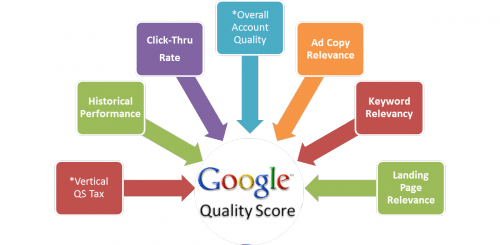
Google grades every keyword/ad pair on a scale of 1–10. That score comes from three pillars:
- Expected click-through rate (CTR) – How likely someone is to click your ad.
- Ad relevance – How well your copy matches the searcher’s intent.
- Landing page experience – How helpful and user-friendly your page is after the click.
Improve each pillar and the whole structure rises.
2. Start With Razor-Sharp Keyword Research
Quality score lives or dies at the keyword level. Begin by:
- Grouping tight themes. Stick to 10–20 closely related keywords per ad group. “Kitchen remodel cost” doesn’t belong with “bathroom tile ideas.”
- Using all match types. Broad match finds new opportunities; phrase and exact keep spend focused.
- Adding negatives early. Filter out phrases that drain budget but never convert (“DIY,” “free,” “jobs”). This lifts CTR because only good matches trigger ads.
Think of keywords like fishing bait. The closer the bait is to what the fish actually eats, the quicker you hook one.
3. Write Magnetic Ads That Mirror the Search
An ad is essentially a promise. Make sure yours delivers by following the “three Rs”:
- Repeat the search term. If the query is “best roof replacement contractor,” echo it in the headline or path. Relevance shoots up.
- Reveal a benefit fast. “Lifetime shingle warranty” beats “We install roofs.”
- Request action. “Book a free inspection today” tells readers exactly what to do next.
Pro tip: Use title-case headlines (Capitalize Each Word) for eye-catching rhythm, and sprinkle emotional words—“stress-free,” “fast,” “guaranteed”—to spur clicks.
4. Supercharge CTR With Extensions
Ad extensions push competitors down the page while giving searchers more reasons to click you. Must-use add-ons include:
- Sitelinks – Highlight services, pricing pages, or testimonials.
- Callouts – Short bursts like “24/7 Service” or “Licensed & Insured.”
- Structured snippets – Show categories such as “Roof Types: Asphalt, Metal, Tile.”
- Call extensions – One tap on mobile starts a conversation.
Google loves extensions because users love them—so your CTR (and score) climb together.
5. Match Landing Page Intent, Word for Word
The moment a prospect lands, they judge whether you can solve their problem. Nail that first glance:
- Mirror the keyword in the headline. Searching “emergency AC repair”? Your page should scream the same phrase up top.
- Keep navigation simple. One crystal-clear path beats a maze of menu options.
- Load in under two seconds. Slow sites tank user satisfaction and your score.
- Add social proof. Star ratings and case studies calm buying nerves.
Picture your landing page as the finish line. The smoother the track, the faster runners cross.
6. Improve Page Experience Fast
Google measures on-page signals like bounce rate and time on site. Quick wins:
- Compress images to cut load time. Tools like TinyPNG work wonders.
- Use responsive design so text and buttons stay readable on every phone size.
- Break text into small bites (subheads, bullets, bold sentences) that guide skimmers.
- Include an obvious call-to-action (CTA) above the fold—no one should scroll to find the next step.
7. Test, Tweak, Repeat
Quality score isn’t “set it and forget it.” Schedule weekly tune-ups:
- A/B test ad copy. Change one line, run for 1,000 impressions, crown a winner.
- Rotate keywords. Pause low performers (<3/10 score) and expand high scorers into their own ad groups.
- Refresh landing pages. Swap testimonials, update pricing, or add a short explainer video to boost engagement.
Small, consistent gains stack up like compound interest.
8. Monitor the Right Metrics
- Quality score trend line – Rising? Good. Flat? Time to dig in.
- Impression-weighted quality score – Tells you where wasted spend hides.
- CPC vs. CTR chart – Ideally, CPC falls as CTR rises.
- Conversion rate – The ultimate proof that better ads equal real dollars.
9. Common Pitfalls (and How to Dodge Them)
| Pitfall | Why It Hurts | Quick Fix |
|---|---|---|
| Stuffing one ad group with 100+ keywords | Low ad relevance | Split into focused themes |
| Sending every click to the homepage | Poor landing page experience | Create dedicated pages |
| Reusing the same ad for years | Stale CTR | Refresh copy quarterly |
| Ignoring mobile speed | High bounce rate | Use Google PageSpeed Insights and compress files |
Avoid these traps, and you’ll sprint ahead of less disciplined advertisers.
10. Quality Score Success Story
A regional HVAC contractor ran ads with a mediocre score of 5. After grouping keywords tighter, rewriting ads to echo search terms, adding callout extensions, and launching a fast service-specific landing page, their average score hit 8. CPC dropped 28%, clicks rose 34%, and monthly leads doubled—without increasing budget. Real proof that a healthier score equals a healthier bottom line.
Ready to Turbo-Charge Your Ads (and Your Website)?
Your ads and your site work hand in glove. Let’s make sure both fit perfectly:
- Free Homepage Review – I’ll record a quick screen-share pointing out instant wins and hidden pitfalls. Grab yours here »
- 10-Point Website Checkup – A deeper diagnostic of speed, SEO, and conversion blockers. Book your checkup »
Tweak your quality score today, and watch every click work harder tomorrow.